
The Lawn Does Not Grow Evenly
A St. Augustine lawn rarely grows at exactly the same rate from one side of the property to the other.
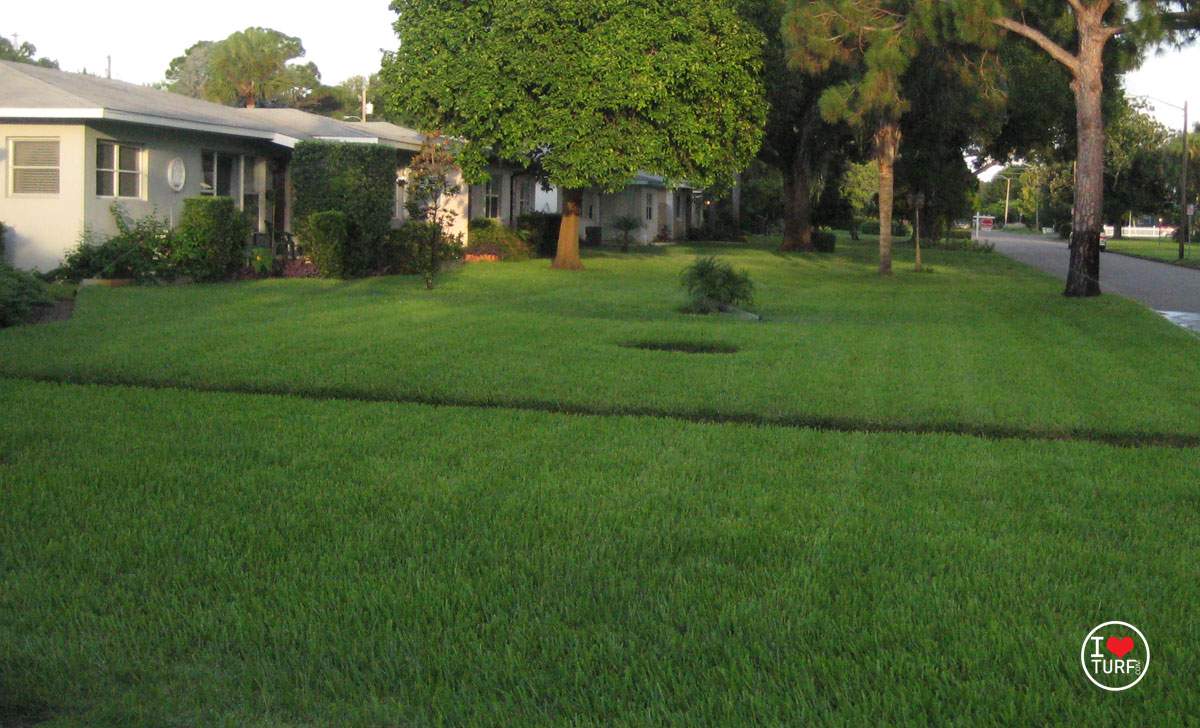
Grass in good soil with adequate sunlight, irrigation and fertility may grow quickly. Areas under trees, over large roots, near compacted soil or where irrigation coverage is poor may grow much more slowly. One part of the lawn might be approaching six inches while a weaker section remains only three inches tall.
That creates a decision for the person mowing the lawn.
If the mower is set high, it will trim the taller grass but may pass over the shorter areas without cutting them. The lawn can temporarily look uneven or “poofy.”
If the mower is lowered to the height of the shortest grass, everything gets cut to a similar level. The finished lawn looks smooth and uniform, but the healthiest areas may lose a large portion of their leaf canopy (scalping) in a single mowing.
Why Mowing Contractors Are Tempted to Cut Low
Mowing companies want the property to look finished when they leave. A uniformly cut lawn gives the immediate impression that the crew did a careful job.
That produces a conflict between appearance and plant health.
If a contractor maintains a higher mowing height, some sections may not be touched by the mower until they catch up with the healthy areas. A homeowner unfamiliar with turf management may think the crew missed spots or failed to mow the property properly.
The contractor knows that lowering the mower will eliminate that criticism. Unfortunately, the practice rewards the appearance of the mowing job rather than the long-term health of the grass.
A lawn should not be cut to match its weakest area. The weaker area should be given time to develop enough canopy to catch up with the rest of the lawn.
What Happens When St. Augustine Grass Is Cut Too Short
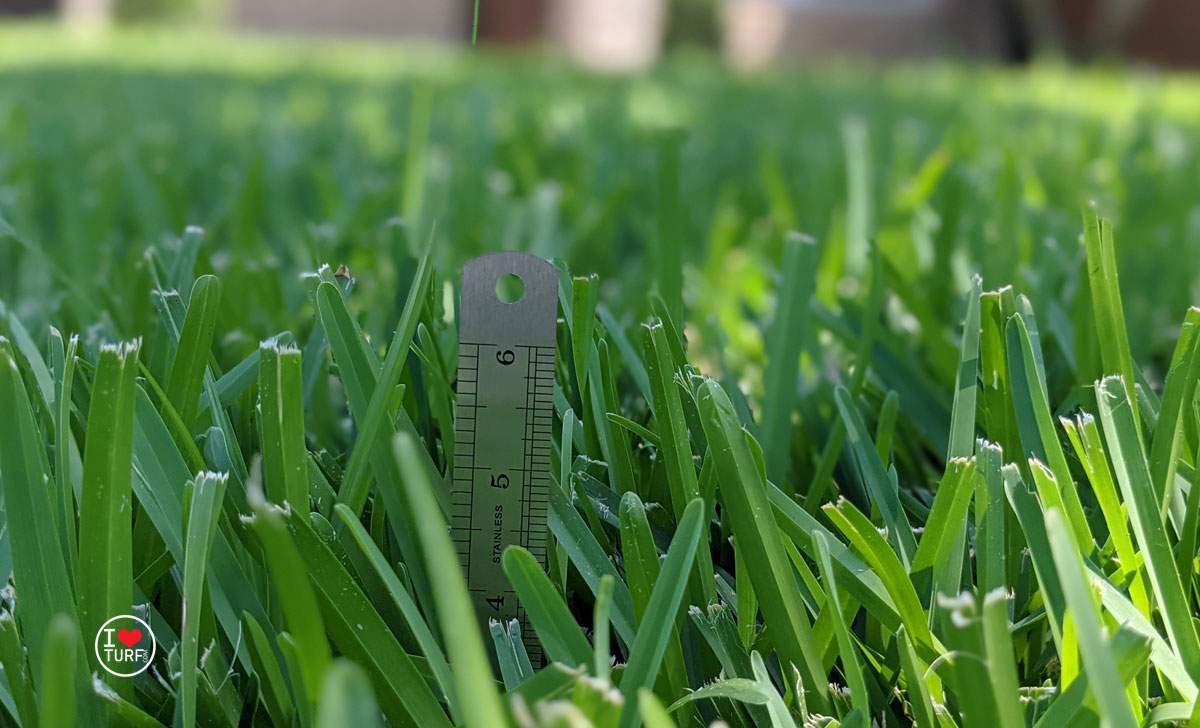
St. Augustine grass spreads through above-ground stems called stolons. Its leaves form a canopy over those stems and the soil surface - the taller the canopy, the better the shade. Canopy height is the distance between the soil surface and the tip of the grass leaf. In Pinellas, the taller the better . I recommend at least 4” canopy, and 6” is better in open sun areas. Under the canopy of trees, you can mow lower because the tree shades the stems and roots..
That canopy performs several important functions:
- It captures sunlight for photosynthesis.
- It shades the soil and aboveground stems.
- It slows moisture loss from the soil surface.
- It moderates soil temperatures.
- It reduces the amount of light reaching germinating weeds.
Removing too much of that canopy exposes more of the soil and turf structure to Florida’s intense sun. The lawn can dry more quickly and become less tolerant of heat, drought, irrigation problems and other stress.
This is especially important during the hot, dry conditions that frequently develop during late spring and early summer in Pinellas County.
Mow to the Needs of the Grass, Not the Weakest Spot
The practical answer is to establish an appropriate mowing height and keep it consistent.
UF/IFAS recommendations are statewide generalities. For standard St. Augustine grass cultivars, UF/IFAS recommends mowing at approximately 3.5 to 4 inches. For Pinellas, with our sandy soils, I found 4” is the bare minimum and a 6” canopy is best. [ask.ifas.ufl.edu]
This means the mowing crew may occasionally need to leave the lawn slightly uneven while slower-growing areas catch up.
The mower’s deck setting is only a starting point. Tire pressure, mower weight, deck pitch, blade condition and the way the mower rides across the turf can affect the lawn’s actual canopy height after mowing.
The important measurement is the grass remaining after the mower passes.
Tell Your Contractor What You Expect
The homeowner must make it clear that turf health matters more than achieving a perfectly level appearance after every visit.
You could tell your mowing contractor:
“Please maintain my standard St. Augustine grass at about four inches and do not lower the mower simply to make the shorter areas match. I understand that the lawn may look slightly uneven while the weaker areas catch up.”
This removes some of the contractor’s concern that you will interpret an uneven appearance as poor workmanship.
If the crew repeatedly cuts below the agreed height, measure the lawn after mowing and discuss the result with the contractor. If the company cannot maintain the requested height, it may not be the right company for the property.
How to Measure Your Lawn’s Actual Height
Do not rely solely on the number printed beside a mower’s height-adjustment lever.
Instead, select several representative areas after the lawn has been mowed. Stand a ruler vertically with its end resting at the soil surface and measure to the top of the remaining leaf canopy.
Take measurements in healthy areas as well as weaker or shaded sections. The goal is not to find one unusually tall blade. It is to determine the general height at which the lawn is being maintained.
A Taller Cut May Not Look Perfect Immediately
There is a psychological element to mowing. Contractors want to see a crisp, uniform result, and homeowners like the appearance of a freshly cut, level lawn.
But the best-looking lawn immediately after mowing is not necessarily the healthiest lawn three weeks later.
It can take time for thin, shaded or poorly irrigated areas to develop a better canopy. During that transition, the lawn may look less uniform than it did when the mower was cutting everything down to the height of the weakest grass.
That temporary unevenness is often the price of allowing the turf to recover.
A mowing company should help the grass grow into a healthier, more uniform lawn. It should not cut the healthiest grass down to disguise the weak areas.