Unintended Consequences
The unintended consequences of once-a-week water restrictions are a series of cascading events that negatively impact the urban environment. When lawns perish from lack of water, they cease to function as a cooling, erosion-controlling, depolluting biological filter. First is the dead grass, followed by dust and weed pollen. Then, to restore the lawn comes the excess application of fertilizers and chemicals. Then comes the erosion and runoff of the very chemicals and fertilizers into surface and groundwater.
Every lawn lost to drought means more heat, more erosion, and more pollution.
Why Lawns are Important to the Urban Environment
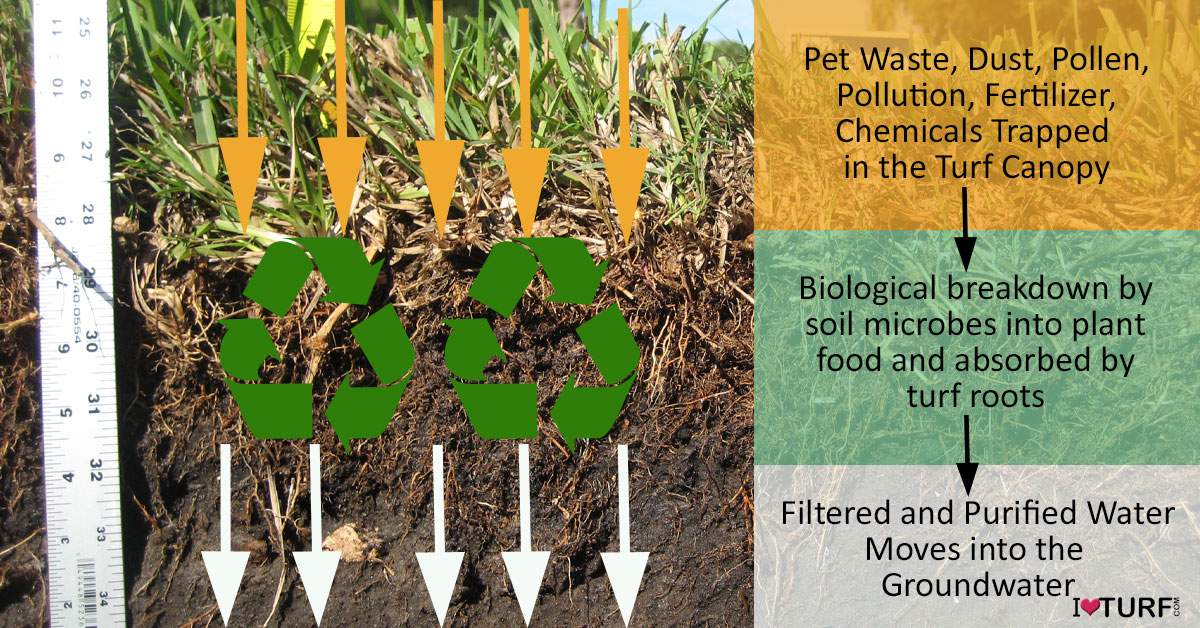
Lush green lawns do more than provide visually appealing landscapes; they are a powerful biological filter that depollutes the urban environment. They depollute the environment by collecting dust, pollen, pollution, and animal waste and enzymatically breaking down pollutants into plant food (composting). A lush green lawn filters rainwater, removing organic and inorganic pollutants collected in droplets as they fall from the sky, and increases rainwater absorption and percolation into the groundwater and aquifer while reducing erosion and runoff.
Once-a-week watering turned once-lush green lawns into dead lawns. A dead lawn does none of these things.
A Dead Lawn Pollutes
A dead lawn provides dust, pollen, and pollution to the environment. Animal waste just sits there. Rainwater flows unimpeded and unfiltered into surface water, carrying dust, pollen, and animal waste. All of this and more are the unintended consequences of once-a-week water restrictions.
Other Consequences
Imagine the homeowner coming home, pulling into his cul-de-sac and being greeted by dead lawns - dead because the government regulators made it illegal to use his irrigation system. His satisfaction with his home is replaced with frustration. Maybe the homeowner considers moving elsewhere where he can have a nice lawn, but who would buy it looking like the Adams Family home?
Replacing a lawn is expensive. The homeowner must sacrifice that new car or vacation to replace his lawn. Something that could have been prevented, if they could use the irrigation system. Out of frustration, the homeowner rejects replacing the lawn and decides to have a dead lawn. The dead lawn reduces the value of his home, and his neighbor’s home.
More Pesticides and Fertilizer
A lush green lawn watered 3 times a week has fewer weeds and bugs and requires less fertilizer – it is almost self-sustaining. Reduce the watering to once-a-week and the same lawn needs more pesticides and fertilizer to survive.
Government Regulators Don’t Care about Your Lawn
Once-a-week watering has unintended consequences that impact everyone in Pinellas. As a collective, all the lush green lawns have a positive impact on the environment as well as physical and mental health. A dead lawn does not.
The government regulators don’t want you to have a lush green lawn. That is not their goal. Their goal is to have you use less potable water, and they believe destroying your lawn will help them achieve that goal, regardless of the consequences.
Turf Policy Watch
We have been gaslit into believing that Florida has a water shortage and that dead lawns will help solve the fake water shortage. We have caved to whatever the regulators demand. Therein lies the problem – no pushback. We folded like a cheap beach chair even though we live in a water-rich state. It is time for some pushback.
Turf Policy Watch (TPW) was created to push back against draconian water restrictions. You can help by forwarding this article to others and signing up for our newsletter here. When you subscribe to Turf Policy Watch, you join a growing group of Pinellas homeowners who want to restore our water rights. Turf Policy Watch's goal is 1000 subscribers – a grassroots organization that can make a difference.